

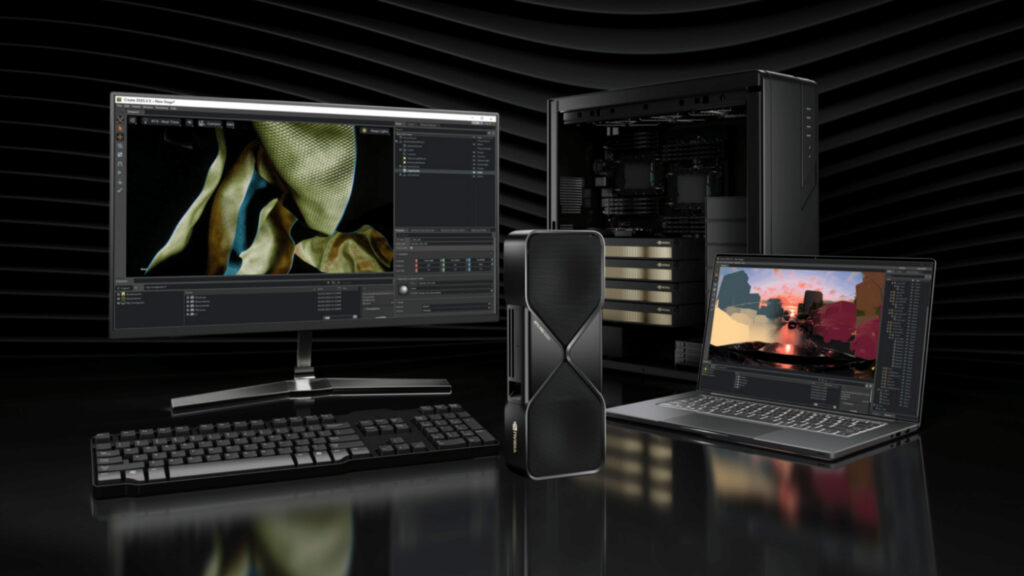
As we navigate the technology landscape of 2026, the Graphics Processing Unit (GPU) has evolved into the heartbeat of modern computing. Today, it is much more than a tool for rendering pixels in a video game; it is the essential engine for local artificial intelligence, real-time photorealistic path-tracing, and high-stakes professional rendering. NVIDIA’s Blackwell architecture and AMD’s RDNA 4 have officially set new benchmarks, pushing the limits of what a desktop workstation or gaming rig can achieve.
Whether you are an enthusiast aiming for 240Hz on the latest titles, a digital artist working with 8K RAW footage, or an AI developer running local inference models, your choice of GPU is the most critical decision in your system build. This guide provides a comprehensive, 800+ word deep dive into the 2026 GPU market, tailored for professionals and enthusiasts who demand elite performance.
Defining Your Workload: Use Cases for 2026
Before investing in silicon, you must identify your primary operational pillar. A card optimized for Unreal Engine 5 development has different requirements than one intended for competitive eSports or high-load LLM inference.
Gaming and Immersive Media
In 2026, 1440p has become the “entry-level” for enthusiasts, while 4K at high refresh rates (144Hz+) is the expected standard for premium builds. Modern gaming GPUs leverage AI-driven reconstruction features like NVIDIA’s DLSS 4 and AMD’s FSR 4 to achieve photorealistic visuals at high frame rates. If your goal is high-refresh competitive gaming, you must prioritize raw rasterization and minimal latency. For single-player immersion with full Ray Tracing/Path Tracing, flagship hardware with dedicated AI cores is non-negotiable.
Professional Content Creation and 3D Workflows
Architects, engineers, and digital filmmakers require specialized drivers and higher memory stability. Professional cards like the NVIDIA RTX A-series or AMD Radeon Pro come with ISV (Independent Software Vendor) certifications. This ensures that critical software like Autodesk Revit, SolidWorks, and DaVinci Resolve run with 100% stability. These cards often feature ECC (Error Correction Code) memory to prevent data corruption during rendering cycles that can last for days.
Local AI and Machine Learning Inference
The “Local AI” movement is the largest shift in 2026. Businesses are moving compute away from expensive cloud subscriptions toward local workstations for data privacy and zero-latency inference. AI workloads rely heavily on Tensor cores and massive VRAM capacity. To run a 70B parameter model locally with acceptable speed, 24GB of VRAM is now considered the absolute baseline. Because the PyTorch and TensorFlow ecosystems are built around CUDA, NVIDIA continues to hold a strategic advantage in this sector.
Architecture Deep Dive: NVIDIA vs. AMD
NVIDIA Blackwell (RTX 50 Series)
The Blackwell architecture introduces GDDR7 memory, offering a monumental leap in bandwidth. By utilizing a 512-bit memory bus on flagship models, NVIDIA has removed the bottlenecks that previously limited 4K path-traced performance. The inclusion of 4th Gen Tensor Cores provides the throughput required for real-time AI-assisted rendering and deep learning tasks.
The RTX 5090 is effectively a workstation card in gaming attire. With 32GB of GDDR7, it can handle data-sets that previously required enterprise-grade A6000 silicon. It is the only choice for researchers deploying local LLMs or elite creators working in 8K RAW video environments. Pair this with a high-end Processor to ensure no system bottlenecks.
AMD RDNA 4 (RX 9000 Series)
AMD has doubled down on efficiency and rasterization value. RDNA 4 focuses on high-speed cache and optimized ray-tracing hardware to compete at a lower price point. For users on Linux platforms, AMD remains the preferred choice due to superior open-source driver support and overall system transparency.
In 2026, the 4090 is the “smart professional” pick. It remains a monster for AI inference and 3D rendering. For studios in Houston building multi-GPU render farms, the current price drops make the 4090 the most cost-effective way to stack VRAM capacity.
The 2026 VRAM Guide: Capacity is King
Clock speeds mean nothing if your VRAM overflows into system RAM, causing performance to crater. As textures and AI models grow, capacity has become the primary metric for longevity.
Brand Battle: NVIDIA RTX vs. AMD Radeon
The choice between Team Green and Team Red in 2026 often comes down to ecosystem versus raw value.
| 🟢 NVIDIA RTX (Blackwell) | 🔴 AMD Radeon (RDNA 4) |
|---|---|
|
✓ **CUDA Dominance:** Industry standard for AI, ML, and specialized rendering engines like Octane. ✓ **Ray Tracing Apex:** Dedicated hardware ensures the best performance in path-traced lighting. ✓ **DLSS 4:** Best-in-class upscaling for a crisp image at high frame rates. ✓ **Broadcast Features:** Superior noise-canceling and virtual background tools for remote professionals. |
✓ **Rasterization Value:** Often provides 15–20% better raw gaming performance per dollar. ✓ **VRAM Generosity:** AMD typically offers higher VRAM at lower price points than NVIDIA. ✓ **Linux Optimized:** Superior open-source drivers make it the #1 choice for Linux power users. ✓ **Open Ecosystem:** FSR 4 works on almost any hardware, avoiding brand-locking. |
Infrastructure Requirements: Don’t Starve Your Card
A modern flagship GPU in 2026 can consume upwards of 450W. This necessitates a high-wattage, ATX 3.1 compliant power supply with a native 12V-2×6 connector. To truly leverage these cards, your system should utilize NVMe SSD storage for rapid asset streaming via DirectStorage. If your workstation is in a high-temperature environment like Houston, pay careful attention to your chassis airflow to avoid thermal throttling during long rendering cycles.
Frequently Asked Questions — GPU Buying 2026
Ready to Elevate Your Compute Power?
Calderix Technologies · Houston, TX · (832) 924-0490
1919 Taylor Street STE F, Houston, TX 77007