
The processor you choose for your workstation defines every aspect of your professional output. In 2026, the CPU is no longer just a calculation engine; it is a complex orchestration of high-performance cores, efficiency cores, and dedicated AI neural engines. Whether you are rendering cinematic 4K video, training local machine learning models, or architecting massive CAD assemblies, your CPU choice dictates your speed to market.
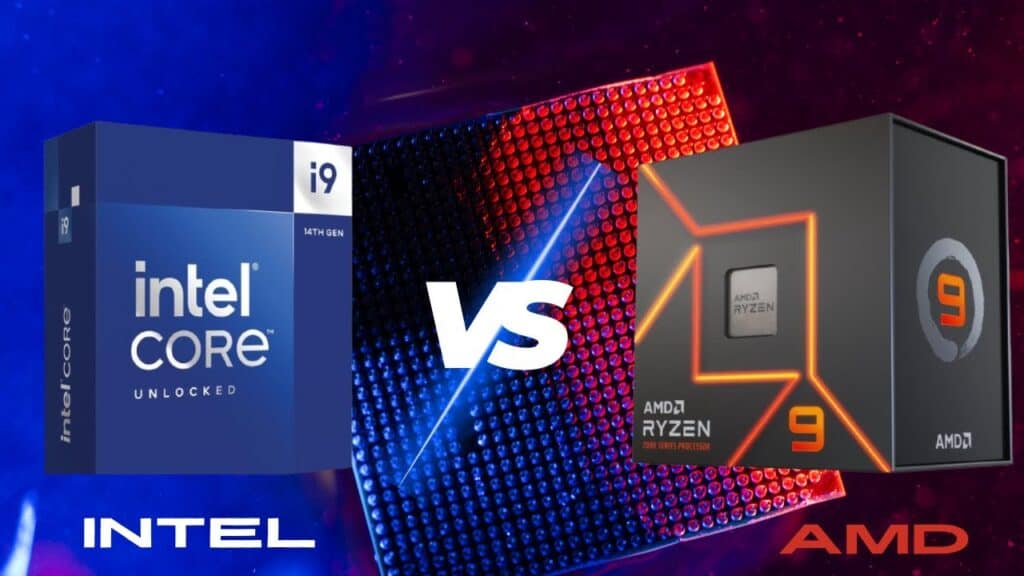
This comprehensive guide explores the top workstation processors of 2026. We break down the architectural shifts between Intel and AMD, examine real-world benchmarks across professional software suites, and provide a strategic framework for procurement. From boutique creative studios in Houston to enterprise-level data centers, choosing the right silicon is the most critical hardware decision of the decade.
The 2026 CPU Revolution: AI and Efficiency
The defining characteristic of the 2026 CPU landscape is the integration of the NPU (Neural Processing Unit). Modern software — from Adobe Creative Cloud to AutoCAD — now utilizes on-device AI to accelerate tasks like generative fill, noise reduction, and predictive modeling. Selecting a CPU today requires looking beyond mere clock speeds to examine AI throughput and cache architecture.
Intel’s Hybrid Dominance: Arrow Lake & Panther Lake
Intel’s 2026 strategy centers on the Core Ultra 200 series. Built on the Arrow Lake-S desktop platform, these chips utilize a refined hybrid architecture that separates Performance-cores (P-cores) for heavy foreground tasks and Efficient-cores (E-cores) for background management. This leads to a smoother multitasking experience, especially when running resource-heavy applications like Premiere Pro alongside data-intensive networking tasks.
For mobile professionals using premium laptops, the Panther Lake architecture delivers unprecedented battery efficiency without sacrificing the single-threaded “snap” that Intel is known for. The integrated Intel Quick Sync hardware continues to be a massive advantage for anyone working in H.264/H.265 video formats.
AMD’s Zen 5 & 3D V-Cache Mastery
AMD’s Ryzen 9000 series, powered by the Zen 5 architecture, has solidified AMD’s position as the king of multi-threaded throughput. By significantly increasing Instructions Per Clock (IPC), AMD has closed the gap in single-threaded tasks while maintaining a lead in thermal efficiency. The standout feature remains the 3D V-Cache found in “X3D” models, which provides a massive pool of L3 cache that accelerates simulation and rendering workloads that are traditionally cache-starved.
In the high-end desktop (HEDT) space, Threadripper PRO 7000 remains the undisputed choice for users requiring more than 16 cores, offering up to 96 cores and extensive PCIe 5.0 lanes for multiple high-end GPUs and NVMe storage arrays.
Strategic Workload Breakdown
Software like V-Ray, Arnold, and Blender Cycles scales linearly with core counts. In this domain, raw multi-threaded power and memory bandwidth are the ultimate metrics.
Video editing is a hybrid task. The timeline needs high single-core clocks for responsiveness, while the export requires multi-core power and dedicated media engines.
Applications like SolidWorks, Revit, and AutoCAD are notoriously single-threaded. High clock speeds and validated ISV stability are non-negotiable.
Compiling code and running multiple Virtual Machines (VMs) or Docker containers requires a massive amount of physical cores and ultra-fast storage access.
Top Recommended CPUs for 2026
The Prosumer Champions
This is the most versatile workstation CPU ever built. It dominates in rendering and simulation while providing a smooth, high-bandwidth experience for data scientists.
Intel’s flagship for the creative professional. Its massive single-core boost makes it the undisputed king of CAD and high-bitrate video editing.
The Professional HEDT Tier
For environments where 16 cores are simply the starting point, the HEDT (High-End Desktop) space offers the expansion required for enterprise workflows. These platforms support ECC (Error Correction Code) memory, which is essential for long-term calculations where a single bit-flip could ruin weeks of data processing.
- AMD Threadripper PRO 7995WX: With 96 cores, this is a “server-in-a-box” designed for high-end VFX houses and AI research labs.
- Intel Xeon W-3500 Series: Offers the highest level of ISV (Independent Software Vendor) certification, ensuring 100% stability in engineering environments like CATIA or Siemens NX.
Future-Proofing: Thermal and Infrastructure Needs
As CPU performance has scaled, so have thermal and power requirements. In 2026, a high-end workstation CPU can draw upwards of 250W under full load. Proper thermal management is no longer an afterthought; it is a stability requirement. We recommend 360mm AIO liquid cooling or high-mass dual-tower air coolers for all Core Ultra 9 and Ryzen 9 builds.
Furthermore, ensure your motherboard utilizes the latest DDR5 memory. In 2026, DDR4 has been fully relegated to the budget tier, as modern processors rely on the massive bandwidth of DDR5-6400+ to feed their high core counts without stalling.
Frequently Asked Questions — Best CPUs 2026
Ready to Power Your Professional Workflow?
Calderix Technologies · Houston, TX · (832) 924-0490 · calderixtech.com
Request a B2B Quote | Learn About Our Team
WhatsApp: (713) 794-6862